1.11 Food Chains and Food Webs
Do three things: a photo challenge, a hands-on lab, and a quick check.
Unit 1 · Topic 1.11
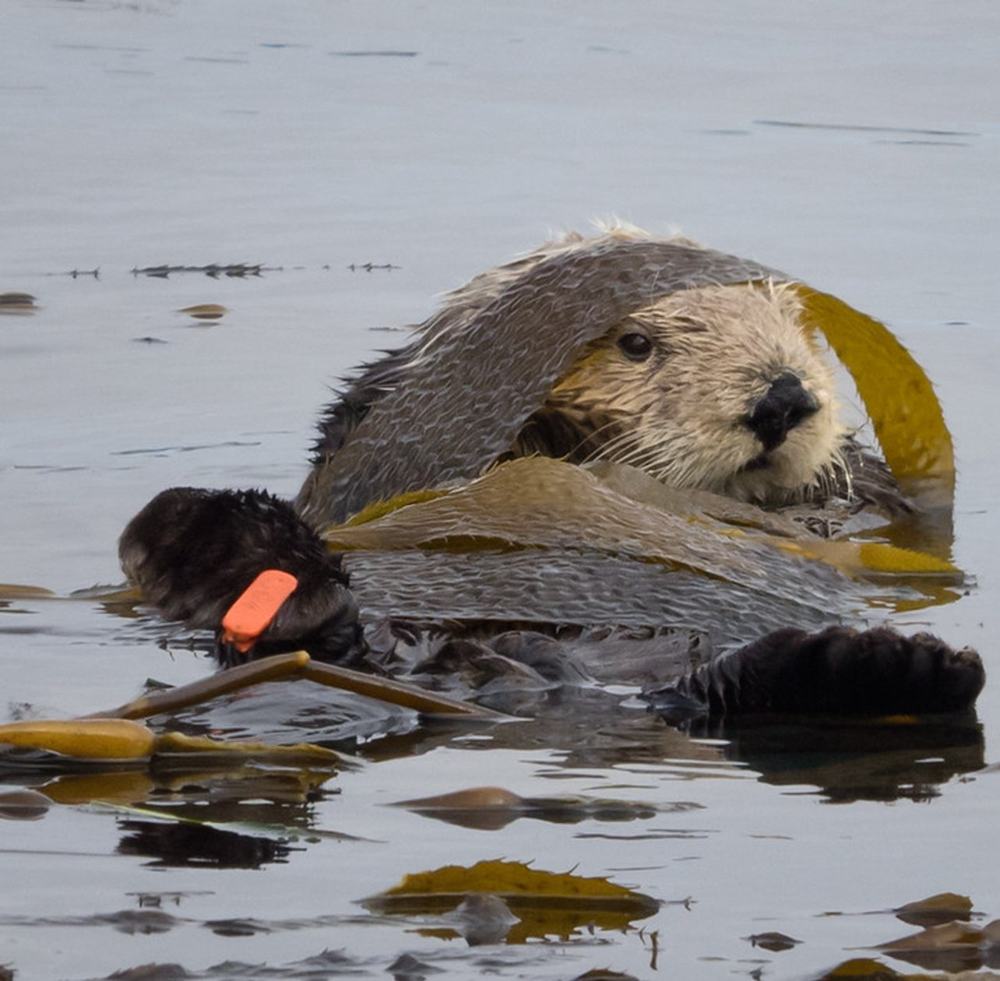
What happens to a whole kelp forest when one furry predator disappears?
Do 1Which kind of feedback?
Read each scenario. Decide whether the loop keeps balance or amplifies change.
Do 2Pull a thread
Do 3Quick check
Your topic score
Try the species interactions simulator
Key terms
- Food chain
- A single path of energy from producer to top consumer.
- Food web
- Many linked food chains in one ecosystem.
- Keystone species
- A species with an effect on its ecosystem much larger than its numbers suggest.
- Trophic cascade
- A change at one trophic level that ripples through the levels above and below.
- Negative feedback
- A loop that reverses a change and keeps balance.
- Positive feedback
- A loop that amplifies a change.
Photo credits
- Beaver in a wetland. Photo: YellowstoneNPS (Public domain)
- Elk grazing. Photo: Tim Pearce, Los Gatos (CC BY 2.0)
- Kelp forest. Photo: eviltomthai (CC BY 2.0)
- Canada lynx. Photo: kdee64 (CC BY 2.0)
- Sea otter in kelp. Photo: Ingrid Taylar (CC BY 2.0)
- Sea urchins on rock. Photo: liqube (CC0)
- Wetland marsh. Photo: BLM Oregon & Washington (CC BY 2.0)
Photos are public domain, CC0, or CC BY. Diagrams and data are original to Green Flask Science.
Teaching AP Environmental Science?
The Green Flask Science™ full-year APES bundle covers all nine units with slides, guided notes, original activities, simulations, and quiz and test banks.