1.1 Introduction to Ecosystems
Do three things: a photo challenge, a hands-on lab, and a quick check.
Unit 1 · Topic 1.1
Why do two species that never touch each other still affect each other?
Do 1Name the relationship
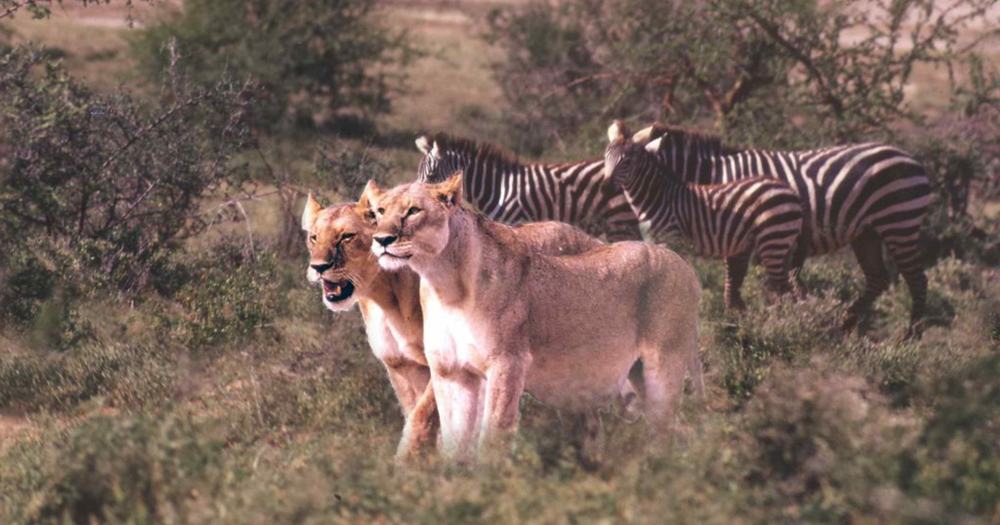
Look at the photo. Pick the interaction.
Do 2Divide the tree
Three warbler species share one spruce tree. Choose where each one feeds.
Competition
Do 3Quick check
Your topic score
Try the species interactions simulator
Key terms
- Predation
- One organism eats another. The predator gains and the prey loses.
- Mutualism
- Both species benefit.
- Commensalism
- One species benefits and the other is not affected.
- Parasitism
- A parasite benefits and harms its host, usually without killing it quickly.
- Competition
- Species use the same limited resource, and each is harmed.
- Resource partitioning
- Species divide a shared resource by place, time, or type to reduce competition.
Photo credits
- Barred owl. Photo: James P. Mann (CC BY 2.0)
- Bumblebee on flower. Photo: Pinti 1 (CC BY 2.0)
- Clownfish in anemone. Photo: Unknown photographer (CC0)
- Egret with cattle. Photo: rebeccakoconnor (CC BY 2.0)
- Gulls competing. Photo: piropiro3 (CC BY 2.0)
- Lioness and zebras. Photo: Robin Hutton (CC BY 2.0)
- Tick feeding. Photo: Jean-Paul Boerekamps (CC0)
- Warbler in a conifer. Photo: GlacierNPS (Public domain)
- Gray wolf, Yellowstone. Photo: USFWS Headquarters (Public domain)
Photos are public domain, CC0, or CC BY. Diagrams and data are original to Green Flask Science.
Teaching AP Environmental Science?
The Green Flask Science™ full-year APES bundle covers all nine units with slides, guided notes, original activities, simulations, and quiz and test banks.