1.2 Terrestrial Biomes
Do three things: a photo challenge, a hands-on lab, and a quick check.
Unit 1 · Topic 1.2
If you know only a place's temperature and rainfall, can you predict what lives there?
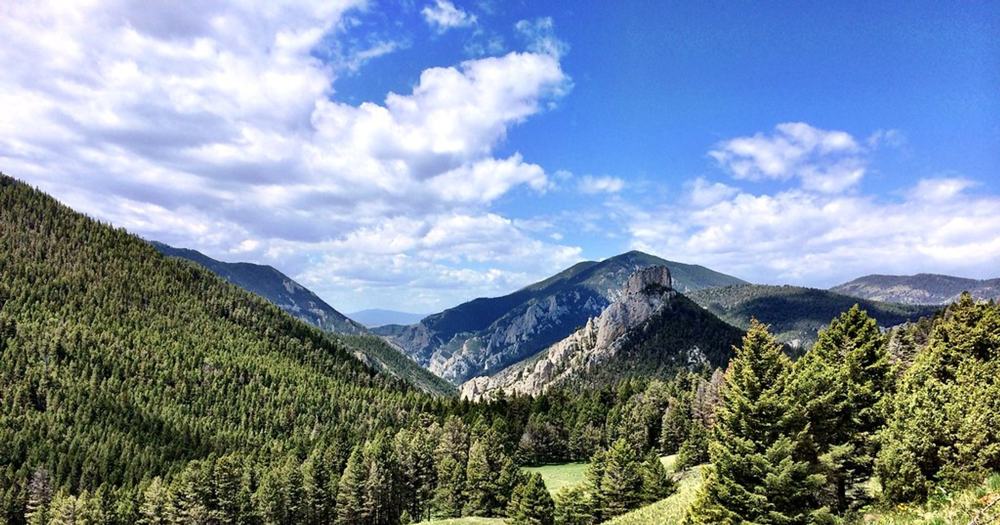
Do 1Name the biome
Look at the landscape. Use the hint if you need it.
Do 2Biome lab
8
60
Simplified from the AP temperature and precipitation diagram. Real biome boundaries overlap.
Do 3Quick check
Your topic score
Key terms
- Biome
- A large region with a characteristic community of plants and animals, shaped by climate.
- Climate
- The long-term pattern of temperature and precipitation in a place.
- Permafrost
- Soil that stays frozen all year, found in tundra.
- Rain shadow
- A dry area on the downwind side of a mountain range, where air has already lost its moisture.
- Elevation and latitude
- Both change temperature. Higher or farther from the equator means colder.
Photo credits
- Joshua trees in desert. Photo: Nicola since 1972 (CC BY 2.0)
- Tallgrass prairie. Photo: USFWS Mountain Prairie (CC BY 2.0)
- Tropical rainforest canopy. Photo: halseike (CC BY 2.0)
- Acacia savanna, Tanzania. Photo: Unknown author (CC0)
- Temperate deciduous forest in autumn. Photo: Nicholas_T (CC BY 2.0)
- Coastal sage scrub and chaparral hills. Photo: USFWS Pacific Southwest Region (Public domain)
- Taiga valley, Alaska. Photo: BLM Alaska (CC BY 2.0)
- Coastal temperate rainforest. Photo: Sam Beebe (CC BY 2.0)
- Arctic tundra. Photo: USFWS Headquarters (CC BY 2.0)
- Mountain valley, forest below meadows. Photo: Forest Service - Northern Region (CC BY 2.0)
Photos are public domain, CC0, or CC BY. Diagrams and data are original to Green Flask Science.
Teaching AP Environmental Science?
The Green Flask Science™ full-year APES bundle covers all nine units with slides, guided notes, original activities, simulations, and quiz and test banks.